
As Christians, what are we called to do because we have received God’s gift of love at Christmas? As Pope Leo XIV writes in his apostolic exhortation, Dilexi Te, “It is not enough to profess the doctrine of God’s Incarnation in general terms. To enter truly into this great mystery, we need to understand clearly that the Lord took on a flesh that hungers and thirsts and experiences infirmity and imprisonment.” “For Christians, the poor are not a sociological category, but the very flesh of Christ.” In Dilexit Nos, Pope Francis wrote that Christ identified himself “with the lowest ranks of society” and with his love poured out in the end, he confirms the dignity of every human being, especially when “they are weak, scorned or suffering.” In the gospel about the Final Judgement, Jesus identifies himself as a brother in need of food, drink and succor.
In the last months of his life Pope Francis was preparing a document on the Church’s care for the poor, and Pope Leo XIV has continued this theme in his exhortation. Pope Leo’s goal is that “all Christians come to appreciate the close connection between Christ’s love and his summons to care for the poor.” Pope Francis, in his encyclical, Dilexit Nos, emphasized, “Our best response to the love of Christ’s heart is to love our brothers and sisters. There is no greater way for us to return love for love.” Howard Thurman reflects this theme in his wonderful poem, The Work of Christmas. Although the song of the angels may fade, we must continue to perform the works of mercy —to find the lost, to heal the broken, to feed the hungry, to release the prisoner and to bring peace to all.
What is this peace that the angels proclaimed and what does it mean for the poor? Peace, translated from the Hebrew, shalom, denotes more than the absence of conflict. According to Biblical Analysis.org, “Christian theology often speaks of peace with God through Christ's atoning work, peace within through the Holy Spirit's presence, and peace with others through love and forgiveness. These dimensions reflect the comprehensive nature of biblical shalom… True shalom cannot exist without justice. The biblical concept inseparably links peace with righteousness, as seen in Psalm 85:10: ‘Righteousness and peace kiss each other.’ This means that genuine shalom requires fair treatment of all people, protection of the vulnerable, and systems that promote human dignity.”
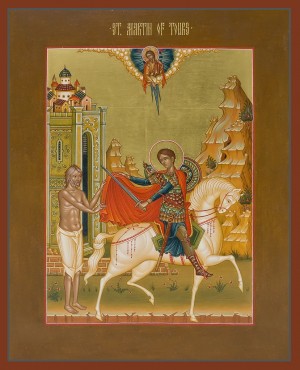
How fitting is the feast of the first martyr, St. Stephen, celebrated on the day after Christmas. He was among a group of deacons chosen to distribute food for the poor. For his preaching about Jesus he was stoned to death in the presence of Saul of Tarsus, who heard Stephen’s last words of forgiveness for his murderers. About Stephen, Pope Leo notes, “In him, the witness of caring for the poor and martyrdom are united.”
The cost of Christmas is the moral demand to bring shalom to the world, and especially, to work for justice for the poor.